Architectural Visualization Pricing in Europe | ZenViz Studio
- Vladyslav Alyeksyenko
- Mar 4, 2025
- 8 min read

Updated: 4 days ago
Pricing architectural visualization is not always simple. A single image can mean many different things depending on the project: a small interior room, a private house, a detailed restaurant, a residential development, a large exterior scene with landscaping, or an animation that needs modeling, lighting, camera work, rendering, and post-production.
That is why ZenViz Studio uses transparent pricing as a guide, not as a rigid catalogue. The goal is to help architects, developers, interior designers, and real estate teams understand the likely budget before starting a conversation — while still leaving enough flexibility to price each project properly.
ZenViz Studio is a lean, senior artist-led architectural visualization studio. You work directly with the person creating the images, without the overhead of a large agency or the uncertainty of a low-cost production line. The result is a balance between strong visual quality, direct communication, and realistic pricing.
Why ArchViz Prices Vary So Much
Architectural visualization prices can vary widely because no two projects are exactly the same.
A simple room with a clear design brief, good drawings, and selected materials can be relatively efficient to produce. A large exterior scene with complex architecture, vegetation, surroundings, vehicles, people, mood, and multiple views takes more time and care.
The final price usually depends on:
the size and complexity of the space;
the quality and completeness of the design materials provided;
whether a 3D model already exists;
the number of views required;
the level of detail in furniture, landscape, materials, and lighting;
the deadline;
the number of revision rounds;
whether the project includes extra services such as animation, 360° views, modeling, or advanced post-production.
This is why a serious quote should always be based on the actual project scope, not only on the word “render.”
ZenViz Studio’s Pricing Philosophy
At ZenViz Studio, pricing is based on clarity, fairness, and the amount of work needed to deliver a high-quality result. The client should understand what is included before the work begins. The quote should reflect the real amount of work needed. And the final image should be strong enough to help the project communicate clearly - whether the goal is a planning presentation, competition entry, investor pitch, real estate listing, or marketing campaign.
Before each project starts, the scope is confirmed clearly: deliverables, timeline, expected resolution, revision structure, available materials, and payment terms.
This avoids confusion and makes the process easier for both sides.
Exterior Rendering Pricing Guide
Exterior images usually require more environmental work than interiors. Even a small house may need landscaping, surrounding context, lighting, camera composition, materials, vegetation, and post-production.
As a general guide, ZenViz Studio’s exterior rendering prices are:
Small Exterior
€180–€350 | 3–5 days
Typical examples:
single-family house;
villa;
duplex;
small residential project.
Approximate scale: 80–300 m²
This range is suitable when the project is compact, the design is clear, and the surrounding context does not require heavy modeling.
Medium Exterior
€400–€500 | 3–6 days
Typical examples:
low-rise housing;
2–4 storey building;
small residential development;
project with more detailed landscaping or surroundings.
Approximate scale: 300–1200 m²
This is often the most common range for serious exterior visualization work: enough detail to make the project feel complete, without moving into large development complexity.
Large Exterior
€500–€700 | 6–10 days
Typical examples:
large developments;
estates;
housing blocks;
complex exterior scenes;
large surroundings or multiple design elements.
Approximate scale: 1200 m² and above
Large exterior scenes usually need more time because the image is not only about the building. The environment, atmosphere, landscape, camera angle, material balance, and post-production all become part of the visual message.
Interior Rendering Pricing Guide
Interior renderings depend heavily on the level of design detail. A simple room with selected furniture and finishes can be efficient. A restaurant, gallery, reception space, or medical interior may require much more custom modeling, styling, lighting, and material coordination.
As a general guide, ZenViz Studio’s interior rendering prices are:
Small Interior
€180–€300 | 2–4 days
Typical examples:
room;
studio;
bedroom;
small office;
compact residential interior.
Approximate scale: 6–25 m²
This range works best when the layout and design direction are already clear.
Medium Interior
€300–€500 | 3–6 days
Typical examples:
office;
retail space;
conference room;
larger residential interior;
commercial room with more design detail.
Approximate scale: 25–50 m²
Medium interiors often need more attention to furniture, lighting, materials, and styling, especially when the image is intended for client presentation or marketing.
Large Interior
€500–€700 | 6–10 days
Typical examples:
restaurant;
gallery;
clinic;
reception area;
hospitality or public interior;
large commercial space.
Approximate scale: 50 m² and above
These projects often require a more complete design atmosphere: furniture, lighting, decor, textures, signage, composition, and a stronger sense of place.
Additional Views, 360° Images, and Animations
Not every additional image costs the same as the first one.
When several renders are produced from the same space or same model, the extra views are usually more efficient. In most cases, additional renders within the same space can be 20–50% lower than the first image, depending on how much new work is required.
For larger image sets, ZenViz Studio offers:
10% discount for projects with 5+ renders
5% discount for returning clients
For 360° views, the price is usually around 1.5× the price of a still image, because the scene has to work in every direction, not only from one carefully composed camera angle.
Animations are priced at €35 per second, in addition to the work needed for modeling, texturing, lighting, scene setup, and camera direction. This keeps the animation price understandable while still accounting for the real preparation work behind the final video.
How AI-Assisted Visualization Can Affect Pricing
AI is becoming a useful tool in architectural visualization, but its value depends on how it is used.
At ZenViz Studio, AI is not treated as a shortcut to cheap images. It is used as a controlled professional tool, combined with architectural knowledge, 3D workflow, composition, lighting, material understanding, and post-production. The goal is not to replace the design process, but to make some parts of the visual process more flexible and expressive when the project allows it.
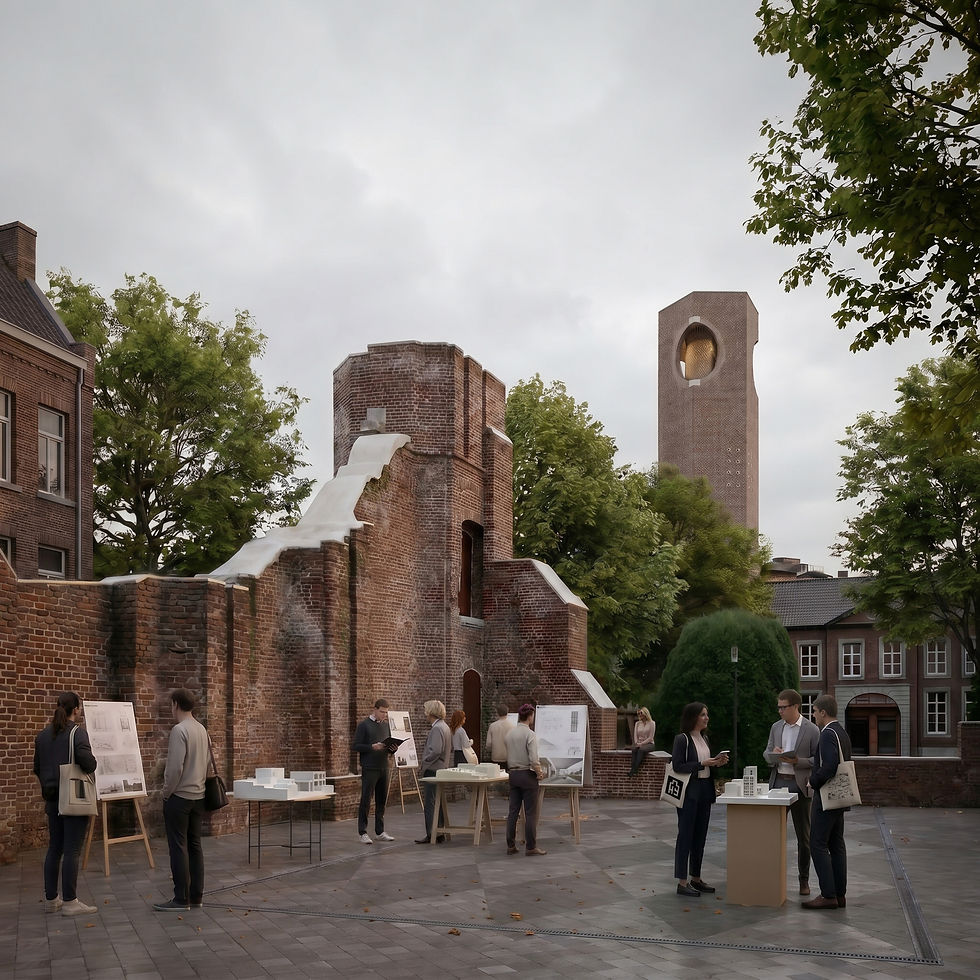
AI-assisted methods can sometimes help reduce time or cost when the task is focused on mood exploration, visual variations, atmospheric studies, image enhancement, or early-stage marketing concepts. In these cases, AI can make it possible to test several directions faster than a fully traditional workflow.
However, AI does not automatically make a project cheaper. When architectural accuracy, consistent geometry, exact materials, repeatable views, or precise design control are important, a proper 3D base is still the safest and most reliable approach. AI-generated work often needs careful direction, correction, cleanup, and professional judgment to avoid unrealistic details, broken geometry, or misleading design information.

For some projects, the best solution is a hybrid workflow: precise 3D for the architecture, supported by AI for atmosphere, post-production, variations, or selected visual effects. For others, especially concept-driven marketing images or cinematic studies, AI can play a larger role — including the creation of complex and realistic video sequences when full technical precision is not the main requirement.
Because of this, AI-assisted visualization is priced according to the actual workflow. It may reduce the cost in some cases, but in others it becomes a specialized creative service that requires the same level of control, taste, and experience as traditional visualization.
What Makes a Project More Expensive?
The biggest cost drivers are usually not mysterious. They are practical.
A project usually becomes more expensive when:
there is no usable 3D model;
drawings are incomplete or still changing;
the scene needs complex landscaping;
furniture and materials must be selected or designed from scratch;
the image requires heavy realism and close-up detail;
the deadline is very short;
there are many stakeholders giving feedback;
animation or 360° output is required;
the project needs several rounds of design changes, not only rendering adjustments.
This does not mean the project is a bad fit. It only means the estimate should honestly reflect the work needed.
How to Reduce the Cost of Architectural Visualization
A project becomes more efficient when the client provides clear information from the beginning.
Helpful materials include:
drawings or plans;
elevations and sections;
a 3D model, if available;
material references;
furniture references;
landscape references;
preferred camera angles;
mood references;
examples of visual style;
deadline and revision expectations.
The better the starting package, the more time can be spent on image quality instead of reconstructing missing information.
Why ZenViz Studio Pricing Is Different
ZenViz Studio is positioned between large visualization agencies and low-cost freelancers.
Large studios can produce excellent work, but their pricing often includes the overhead of a bigger structure: project managers, teams, office costs, and production layers. Very low-cost options may look attractive at first, but they can create risks in quality, communication, reliability, or design understanding.
ZenViz Studio offers a more focused model: senior artist-led work, architectural understanding, direct communication, and careful image-making without large-agency overhead.
That is the core value: professional visual quality with a clear, lean process.
More Than Just a Render
A good architectural image is not only a technical output. It has to explain the project.
It should clarify the space, support the design idea, show the atmosphere, and help people understand why the project matters. For real estate teams, it can help communicate potential before construction. For architects, it can support presentations, competitions, and client approvals. For developers, it can make an idea easier to sell, fund, or discuss.
ZenViz Studio approaches each image with architectural logic first: space, proportion, material, light, and composition. The final visual should feel convincing, but also intentional.
How to Request a Quote
The best way to receive a realistic estimate is to send a short project description with the available materials.
Useful information includes:
project type;
location, if relevant;
number of images needed;
interior, exterior, animation, or 360°;
available files;
deadline;
preferred visual style;
whether the design is final or still evolving.
From there, ZenViz Studio can suggest a clear scope, expected timeline, and price range.
Architectural visualization pricing should not be confusing. It should help you plan. The goal is simple: clear expectations, strong images, and a smooth collaboration from the first message to the final delivery.
If you already know the project scope, you can contact ZenViz Studio and request an estimate:

Success Story: “Quiet Suburbs Near the Bustling Town”
To put everything in context, let’s look at a recent project we completed. “Quiet Suburbs Near the Bustling Town” was a residential exterior visualization set just outside New York City. The design featured modern townhouses in a tranquil suburban setting, and the visualization needed to emphasize the lush greenery and the harmony between the buildings and their environment. This kind of scene required careful attention to detail – especially in rendering realistic vegetation (trees, shrubs, lawns) and the soft evening light that gave the scene its warm atmosphere.
We quoted €400 for this project, which fell on the higher end of our exterior image range due to the complexity (dense planting and detailed lighting take extra time to get right). The result was an image that beautifully captured the “urban convenience meets suburban tranquility” atmosphere the client was after. The client, a New York-based development firm, was thrilled with both the process and the outcome.
FAQ
How much does an architectural render cost in Europe?
Most still images at ZenViz Studio fall between €180 and €700 depending on scale, complexity, available materials, and deadline.
Is a 3D model included in the price?
The estimate depends on whether a usable model already exists. If modeling is needed from drawings or references, that work is included in the project quote.
Are additional views cheaper?
Usually yes. When additional views use the same space or model, they are often 20–50% lower than the first image.
How much does animation cost?
Animation is priced at €35 per second, plus the work needed for modeling, lighting, texturing, scene setup, and camera direction. Can AI reduce the cost of architectural visualization?
Sometimes, but not always. AI can help with mood exploration, variations, post-production, and some concept-driven visuals. For accurate architecture, consistent geometry, exact materials, and repeatable views, a controlled 3D workflow is usually still necessary. At ZenViz Studio, AI is used as a professional tool when it improves the result or makes the process more efficient, not as a replacement for architectural judgment.
Comments